Good Education Should Lead To Good Questions

"If we treat the contemplation of the best life as a luxury we cannot afford, seemingly urgent matters will crowd out the truly important ones."

[....]

"If the aim of education is to gain money and power, where can we turn for help in knowing what to do with that money and power? Only a disordered mind thinks that these are ends in themselves. Socrates offers us the cautionary tale of the athlete-physician Herodicus, who wins fame and money through his athletic prowess and medicine, then proceeds to spend all his wealth trying to preserve his youth. This is what we mean by a disordered mind. He has been trained in the STEM fields of his time, and his training gains him great wealth, but it leaves him foolish enough to spend it all on something he can never buy."

From my latest article, co-authored with John Kaag, in The Chronicle of Higher Education. Read it all here.

Martin Luther on Liberal Education

"Therefore, I pray you all, my dear sirs and friends, for God’s sake and the poor youths’, not to treat this subject as lightly as some do, who are not aware of what the prince of this world intends. For it is a serious and important matter that we help and assist our youth, and one in which Christ and all the world are mightily concerned. By helping them we shall be helping ourselves and all men. And reflect that these secret, subtle and crafty attacks of the devil must needs be met with deep Christian seriousness. If it is necessary, dear sirs, to expend annually such great sums for firearms, roads, bridges, dams and countless similar items, in order that a city may enjoy temporal peace and prosperity, why should not at least as much be devoted to the poor, needy youth, so that we might engage one or two competent men to teach school?"
-- Martin Luther, “To the Councilmen of All Cities in Germany that They Establish and Maintain Christian Schools,” in AE 45:357 (1524) (emphasis added) A full translation of the letter is available here.

Thoreau on Liberal Education, Wealth, and Freedom

“We seem to have forgotten that the expression "a liberal education" originally meant among the Romans one worthy of free men; while the learning of trades and professions by which to get your livelihood merely, was considered worthy of slaves only. But taking a hint from the word, I would go a step further and say, that it is not the man of wealth and leisure simply, though devoted to art, or science, or literature, who, in a true sense, is liberally educated, but only the earnest and free man.”
 -- Henry David Thoreau, "The Last Days of John Brown"

Giving Thanks In The

“‘What a damned country,’ he said. Watching the river, he had not noticed the movement at the far corner of the garden below him, but now as he swung the glasses down he saw there one of the ragged, black-robed boys who raked and sprinkled the paths every day….He stood up, and Chapman stepped back, not to be caught watching, but the boy only pulled on his robe again. Then he knelt once more on the rug of his turban and bowed himself in prayer towards the east…..The praying boy was not pathetic or repulsive or ridiculous. His every move was assured, completely natural. His touching of the earth with his forehead made Chapman want somehow to lay a hand on his bent back. They have more death than we do, Chapman thought. Whatever he is praying to has more death in it than anything we know. Maybe it had more life too. Suppose he had sent up a prayer of thanksgiving a little while ago when he found his son out of danger? He had been doing something like praying all night, praying to modern medicine, propitiating science, purifying himself with germicides, placating the germ theory of disease. But suppose he had prayed in thanksgiving, where would he have directed his prayer? Not to God, not to Allah, not to the Nile or any of its creature-gods or the deities of light. To some laboratory technician in a white coat. To the Antibiotic God. For the first time it occurred to him what the word ‘antibiotic’ really meant." – Wallace Stegner, “The City Of The Living,” in Collected Stories of Wallace Stegner. (New York: Penguin Books, 1991) 524-5. (Boldface emphasis is mine.)


“We live in the Antibiotic Age, and Antibiotic means literally ‘against life’. We had better not be against life. That is the way to become as extinct as the dinosaurs. And if, as the population experts were guessing in November 1954, the human race will (other things being equal) have increased so much in the next three hundred years that we will only have a square yard of ground apiece to stand on, then we may want to take turns running to some preserved place such as Dinosaur….That means we need as much wilderness as can still be saved. There isn’t much left, and there is no more where the old open spaces came from.” – Wallace Stegner, This Is Dinosaur: Echo Park Country And Its Magic Rivers. (New York: Alfred A. Knopf, 1955) 14.

National Park Law - Knopf and Stegner

Those who would protect the Parks and Monuments must rest their case always on the organic law that created the National Park Service. Any attempt to change that law would certainly bring on an instant and nation-wide and wholly bi-partisan explosion of protest. The danger is not that the law will be repealed or changed but that it will be whittled away through special concessions and permits. It is necessary to bear in mind Stephen Mather’s wise warnings when an advocate of whittling insists that he intends to create no precedents. With the best intentions in the world, he could not help creating a precedent. His successors in office might not agree with him about precedents, and they would have to use his own precedent against him.

“The people, to whom the Parks belong, should be given the full facts on which to base a judgment, whenever the question of intrusion on Park lands arises. The people, as taxpayers who foot the bill, should also know, with fair exactness, and from a responsible reviewing body, how much a reclamation project is going to cost them, whether in a Park or not. [....]

“The attitude of Americans toward nature has been changing—slowly, perhaps, but inexorably. Fifty thousand persons camped out in one Park, the Great Smokies, in a single summer month of 1954. That same summer I spent a night at Manitou Experimental Forest, in which a near-by campground, run by the Forest Service and at that moment without a water supply, was expected to be used by fifty thousand people before winter. In 1951 Glacier National Park had a half-million visitors; in 1953 it had more than 630,000. In that same year, the last for which total figures are available, Grand Canyon had 830,000 odd, Yellowstone 1,300,000, and Yosemite just short of a million. Those figures are impressive no matter how you take them. They mean that what the Parks and Monuments provide and preserve without impairment is increasingly appreciated and increasingly needed by more and more millions of American families.”

Alfred A. Knopf, “The National Park Idea,” in This is Dinosaur: Echo Park Country and Its Magic Rivers, Wallace Stegner, ed. 91-91. (New York: Alfred A. Knopf, 1955) (Emphasis in boldface mine)

The Slow, Important Work Of Poetry

At the time it seemed like chance that brought me to minor in comparative poetry in college.

Without having a master plan, over four years I wound up taking a number of poetry classes in four languages. Eventually I asked my college to consider them a new minor area of study. They agreed, and I graduated.

And then, slowly, over a quarter century, I began reading more poetry in more languages. It's always slow; I can't pick up a book of poems and read it like a novel. If the poetry is any good at all, I can read one or two poems, and then I've got to put the book down and let the words sit with me.

Often, I go back and read the same poem again, and again.

The very best poems I try to memorize, even though my memory for verse has never been good. I imagine most people would consider that a useless exercise, a waste of storage space in an already cluttered brain.


But in each season of my life I've found that it is some form of poetry that acts as salve to my soul's wounds or food that sustains its long journey forward.  Homer's long story-poems; old epics and sagas from Ireland and Wales and Iceland; Vedic verses and Greek scriptures; Gregorian chants that have echoed in stone chambers for centuries; Shakespeare's or Petrarch's sonnets; the Psalms and proverbs of Hebrew priests and kings; a few words put together well by Dylan Thomas, Gary Snyder, Tomas Tranströmer, or C.S. Lewis; or the timely phrases of some of my favorite contemporaries like Patrick Hicks, Abigail Carroll, Mary Karr, Wendell Berry, Melissa Kwasny, John Lane, or Brian Turner.  Each of them has, at some point, given me the daily bread I craved.

I can't seem to predict when the need will arise, but suddenly, there it is, and I find myself quoting Joachim du Bellay's sonnet about travel, and home:
Heureux qui, comme Ulysse, a fait un beau voyage
Ou comme cestuy-là qui conquit la toison
Et puis est retourné, plein d'usage et raison
Vivre entre ses parents le reste de son âge
His simple words save me from forming new ones and free me to think and feel as the occasion demands; his words give utterance to what I find welling up inside me. His words change my homesickness into a stage in a worthwhile journey.  Here is a very loose translation of those lines: "Happy is he who, like Ulysses, made a beautiful journey, or like that man who seized the Golden Fleece, and then traveled home again, full of wisdom, to live the rest of his life with his family." We are pulled in both directions at once: towards the Golden Fleece and adventures in Troy, and towards the home we left behind when we departed on our quest.

That sonnet often reminds me, in turn, of verses about Abraham.
Consider Abraham, who dwelled in tents,
because he was looking forward to a city with foundations.
This longing for home that I sometimes have when I travel is itself no alien in any land.  We all may feel it in any place.  Everyone feels lost sometimes. Knowing that others have found words to express their feeling of being lost is itself a reminder that we are not alone. Hölderlin's opening words in his poem about St. John's exile on Patmos say this well:
Nah ist, und schwer zu fassen, der Gott
It does seem that God - like home and family and love and neighbors - is close enough to grasp, so close that we could meaningfully touch them all right now. And yet so far that nothing but our words can draw near.

I am no good at praying, but I often wish I were. I think the fact that we make light of prayer - both by mocking those who pray and by being those who speak piously of prayer but who do not allow ourselves to confess the weakness prayer implies - says something of another shared longing, not unlike the longing for home.  We long to comfort those far away when tragic events fall on them.  They may be total strangers, but we know how horrible we would feel in their place, and we know that right now there is nothing we can do to staunch the flow of pain for them.  But we can hold them in the center of our consciousness and, for a little while, not let any lesser thoughts crowd them out of our hearts and minds.  We can, for a little while, consider our lives to be connected to theirs.  We can, for a little while, ask ourselves what we might do to change the world so that this pain will not be inflicted on others.

Since I am not adept at praying, In those times I find the prayers of others buoy me up above the waves of emotional tempest.  The prayer books of my tradition - the various versions of The Book of Common Prayer - often transform my anguish into something articulate. Of course, we turn to that same book when a baby is born, when a couple is wed, and when our beloved are interred.  These events? We know they are coming, and yet it is not easy to prepare oneself, to be always ready for those days.  I live in a tent; poetry often gives me a foundation to build on, and the better I've memorized it, the stronger that foundation becomes.

Those words, buried like seeds, slowly come to bear fruit in my life.  Sometimes I wonder: was it really chance that brought me to the poems?

In the hardest of times, and also in the most joyful times, the words of poets are like a cup of water in a dry place. They refresh me, and they clear my throat so that I can take in that which sustains my own life, and speak other words, both old and new, that may sustain the lives of others.


Gifts From My Father

My father spent his career as an engineer working for IBM and NASA.  Growing up with an engineer is an education in itself.  As a boy, I felt like whenever I was with my father, I was learning new things.  We'd go out for pizza and he'd write chemical equations on napkins.  We'd go to the Ashokan Reservoir and he'd tell me the history of the valley that was flooded so that New York could get water, and then he'd tell me how they engineered the pipeline that carried the water to the city.  

Often he was at his desk or his workbench, and I didn't want to interrupt him when he was working on problem-solving, but I'd try to spend time in his office or workroom until I made too much noise and was asked to move on to other exploits.  I'd stare at his shelves, heavy with books and tools, and full of things he had picked up in his travels.  He had a small, round stone that he had found somewhere, that had been shaped as a toy by our Algonquin ancestors. He had musical instruments and geometric shapes made of plastic and wire, and books on how to learn Russian or how to understand religion.  On his workbench there was an oscilloscope that he'd sometimes use, and I loved that machine's interpretation of the data it received. My father's mind is a small liberal arts college unto itself, and his curiosity about the world seems to know no limits.  

Recently I was going through some boxes of things that have moved across the country with me many times.  I am an anti-hoarder, someone who prefers to give things away rather than store them forever.  But some things are hard to part with, especially when the memories associated with them are so strong.


Here's a snapshot of a few of the things I hang onto precisely because they remind me of Dad.  The gyroscope and wooden puzzle were gifts he brought me when I was a small boy.  I think he got them on business trips.  I've kept them both because they bring me wonder and delight, and because I like to use them to teach children.  The weather radio is probably silly, and I don't use it any more, but it reminds me both of Dad's constant interest in solving problems before they are crises, and of his lifelong interest in electrical engineering.  He built a computer in his fraternity house back before most people knew what computers were.  He would take apart radios so he could put them back together and understand how they worked.  

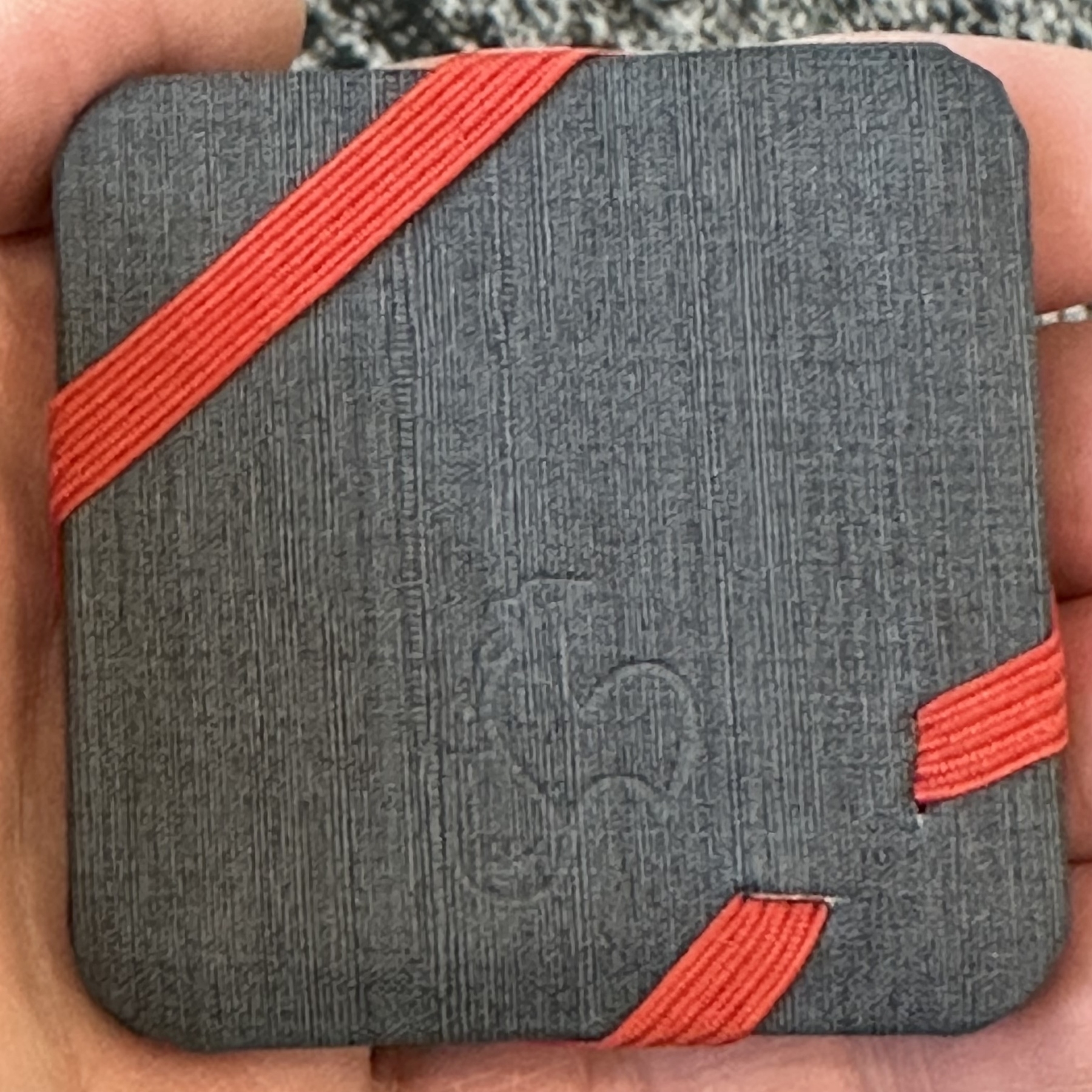
I never picked up his gift for electrical engineering, but I've got his curiosity about how things work, which I tend to apply more towards ecology than technology.  For me, technology and ecology come together in some important ways, nonetheless.  This pocket microscope he gave me has been with me for thirty years or more, and I like to think of it as a seed.  I've often been tempted to give it away, but instead I have held onto it, and every time I think of giving it away I buy more of them and give them to teachers.  Each year I teach for a month in Guatemala, and while I am there I look for teachers in local schools and give them boxes of microscopes and other hand lenses.  

I am reminded that much of the history of science (Dad's field ) and of philosophy (my field) have grown with advances in optics.  When scientists get better lenses and lasers and satellites, knowledge tends to grow rapidly.

The same is true for children: give them a hand lens, or an insect viewer, or a microscope with some prepared slides, and the world will suddenly become new to them.  Dad planted that seed in me long ago.  Now I carry a hand lens with me almost everywhere I go. I suppose the whole of my career is a reflection of the things that delight Dad and provoke his curiosity; most of them delight me and make me curious, too.  And just as Dad passed on his curiosity to me, now it is my turn to pass it on to others.   

Racism, Samaritans, and Saints

As I've read news about recent protests on campuses across the country I've often wondered how I could respond helpfully if I were an administrator at one of those campuses. And I have not found it easy to answer my own question.

The closest I've come is this: when my kids were little, I taught them that despite what others may say, there are no bad words; but there are bad uses of good words. When we use our words to hurt others or to deprive them of what they need to grow and flourish, we are using our words badly.

Plainly there are acts, institutions, rituals and monuments that foster an undeserved poor view of some of our neighbors. Those should be changed or abolished.

But I don't think that's enough, and those might be more like symptoms than the illness itself.

I think we need to work to make sure we use our words in ways that help and heal, nurture and teach. I think we need leaders (at all levels) who will take positions of leadership as opportunities to edify and promote those who have not had such opportunities yet.

To put it in simpler terms, I think we need to work harder at loving our neighbors. Jesus told a story about this once, focusing on established ethnic hatred with deep political roots. I refer to the parable of the "Good Samaritan." This parable is the best answer I've got so far to the question I have posed for myself. If you've got the power to help others, and you see others needing help, then help them without regard for what it costs you. This is not easy, but it's what I want to strive for. 

*****

What do you think? What am I forgetting? Am I too naive and optimistic? I welcome thoughtful replies that show kindness towards a wide range of readers. (If you want to simply cuss me out or insult my ignorance, please save that for a direct message, or let me take you out for a beer or coffee so you've got more of my attention. Thanks.)

The Lesser Feast of C.S. Lewis

On this day in 1963, Clive Staples Lewis died.  Some of us now observe November 22nd as the Lesser Feast of C.S. Lewis.  Here is one of my favorite passages from Lewis: 

“To be frank, I have no pleasure in looking forward to a meeting between humanity and any alien rational species. I observe how the white man has hitherto treated the black, and how, even among civilized men, the stronger have treated the weaker. If we encounter in the depth of space a race, however innocent and amiable, which is technologically weaker than ourselves, I do not doubt that the same revolting story will be repeated. We shall enslave, deceive, exploit or exterminate; at the very least we shall corrupt it with our vices and infect it with our diseases. We are not yet fit to visit other worlds. We have filled our own with massacre, torture, syphilis, famine, dust bowls and all that is hideous to ear or eye. Must we go on to infect new realms? ...It was in part these reflections that first moved me to make my own small contributions to science fiction. In those days writers in the genre almost automatically represented the inhabitants of other worlds as monsters and the terrestrial invaders as good….The same problem, by the way, is beginning to threaten us as regards the dolphins. I don’t think it has yet been proved that they are rational. But if they are, we have no more right to enslave them than to enslave our fellow-men. And some of us will continue to say this, but we shall be mocked.”
--C.S. Lewis, “The Seeing Eye,” in Christian Reflections, Walter Hooper, Ed. (Grand Rapids, MI: Eerdmans, 1968), 173-4.

South Fork, Eagle River

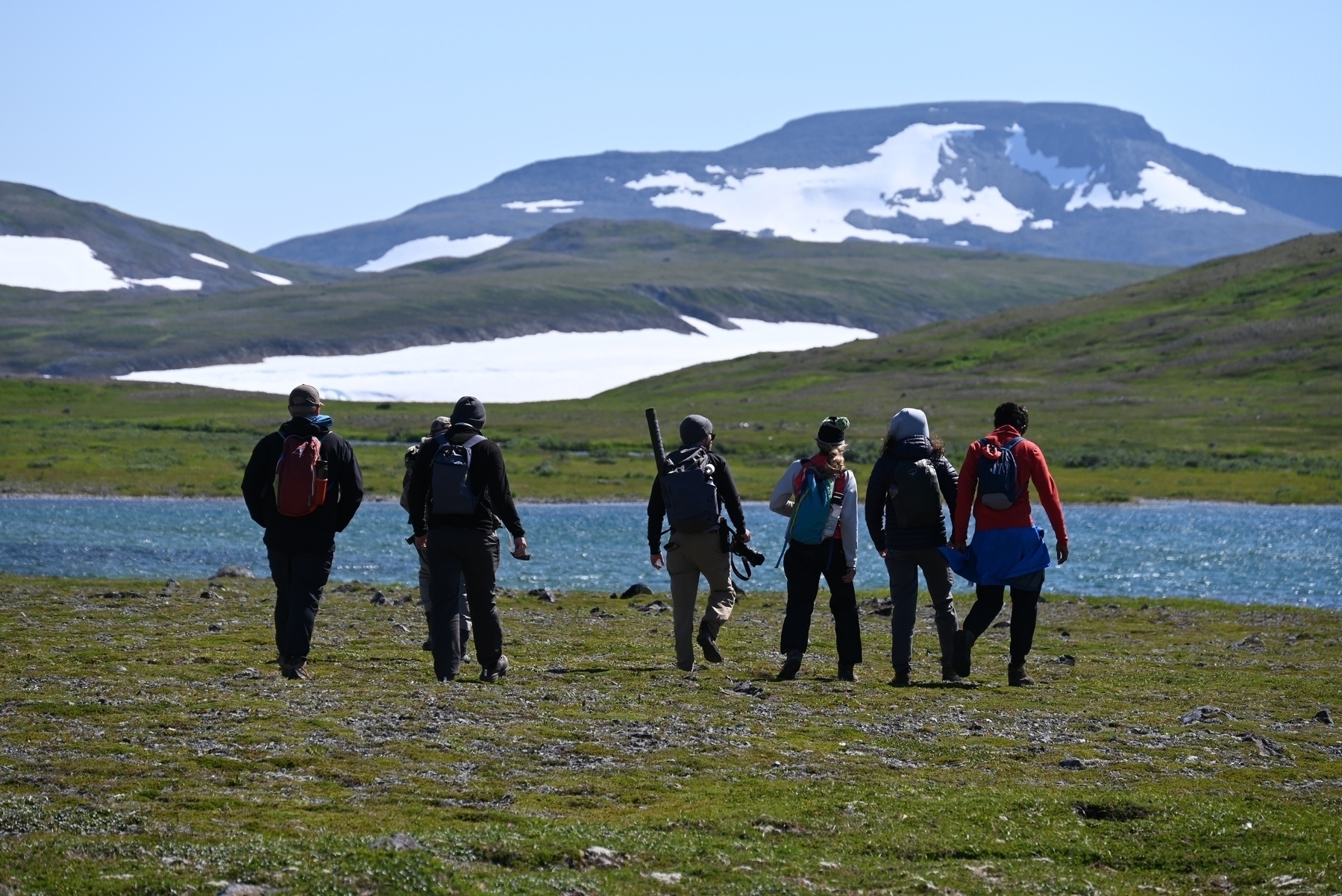
After breakfast we put sack lunches in the cooler and threw our backpacks in the fifteen-passenger van. Half an hour later we were piling out at the state park on the South Fork of the Eagle River.

The houses here are ugly. Taken on their own, any one of them is a beautiful building. Plainly this is spendy real estate in God’s country. But the houses look like they were lifted from the pages of some little-boxes-full-of-ticky-tacky architectural lust propaganda and carpet-bombed on the hillside, then allowed to remain wherever they fell. There is no order, no sense that the houses were built for the place. Every one of them is a garish, angular excrescence on the opposite hillside. No doubt their inmates would disagree with my assessment; they only see the houses up close, and from the inside. They must have no idea how out of place their unnatural rectangles look against the sweeping slope of the Chugach Range. No doubt, when you’re on the other side of those big plates of glass, gazing over here at the state park over your morning K-cup, the view is precious. But when you’re in the state park, looking back, there is nothing on the opposite hillside to love. Over here, there is only regret that these people believed that you could buy both the land and the landscape.

It’s about three miles’ hike in to first bridge in state park. A fairly easy up-and-down walk. It’s raining. Spitting, really, what they call chipichipi in Guatemala, a constant drizzle. The sky is a palette of cottony grays that have lowered themselves onto the mountaintops. There is a clear line below which the mountains are visible. Above it, clouds roll and shift.

I shiver a little in my heavy raincoat and think about putting on my rain pants, but I know I’ll be too hot if I do. Some of my students are wearing shorts.

At the footbridge we sit and eat our lunches. The university has packed us red delicious apples (a mendacious name), bags of honey Dijon potato chips, and turkey sandwiches with lettuce and onions. It’s not good turkey, but no one cares. This is a lovely place. We have other food in this place.


The river is only fifteen feet wide here, and it is the color of chalk, like diluted Milk of Magnesia. Taking off my shoes, I wade in.  Immediately my feet start to ache with cold. Turning over a stone, I look at its underside.  The gray water drips off and a tiny larva wriggles to get out of the light. It's too small to identify it, maybe a miniscule stonefly.  A huge blue dragonfly cruises over the river, darting past me.

There are lots of wildflowers up here. One of my students is on the ground with her laminated guidebook, puzzling over one specimen. I've been carrying these guides everywhere, but they're only helpful for about seventy-five percent of the common stuff. There's just too much life here to get it all in a book.

The flowers grow in so many colors, so many strategies for getting the scarce pollinators' attention in the brief summer. Yellows, purples, and blues predominate. The guidebook warns me about several of the purples: DO NOT EAT THIS! Some of them are poisonous.  So are a few of the yellows. This is a beautiful place, but it's also a harsh place, and life clings to the edge. Poison is one good way not to get eaten, I suppose. Looking up the mountain, the trees give way to shrubs a hundred yards above us.  A hundred yards more and there's only grass.  Above that, I can only see rock.

Some of these plants have another strategy: rather than avoiding getting eaten, they invite it. Berries are the way some plants make use of animals to carry their seeds to new places.  Bear scat, full of seeds, is all along the trails here.  Each mound is a nursery where some new plant may grow in the fertile dung.

There is a kind of berry like a blueberry that grows on something that looks like a mix between evergreens and moss, only a few inches high.  Some people call it "mossberry," appropriately.  Some locals call it a blackberry.  Matt tells us they're crowberries, as he gathers a handful. He eats some and then the students tentatively pick and eat some too.

We spend three hours there at the bridge, observing. There's so much to see.  Some of us write, some draw, some stare at the peaks that surround us.  A few doze off.  I get out my watercolors and try to paint the landscape, but I'm quickly frustrated. There are so many greens and grays and blues, and I'm no good at mixing colors.  I keep painting anyway.  I can at least try to get the shapes right, I think, but I'm wrong about that, too.  The mountains are stacked up in layers, and the lines look clean and clear at first, but when I try to focus on them they blur into one another.  The hanging glacier at the end of the valley looms over us, silent and white and yet so eloquent.  The glaciers are what made all of this, and even though they have retreated, the river runs with their tillage, the plants grow in their finely ground dust, the smooth slopes were ground smooth by millennia of ice.

Upstream, Brenden hooks his first-ever dolly varden. This is his first fish in Alaska. He is positively glowing with delight. He cradles it in his hand and then quickly returns it to the water pausing only to admire this vibrant glacial relic of a char.  It too depends on the glacier.

The temperature is constantly shifting as the sun comes in and out of the clouds. Each part of the valley takes its turn being illuminated: the river shines like silver; the mountainside glows bright green and the rocks and bushes above the tree line cast sharp shadows; high in the valley small glaciers are bright ribbons streaking the blue granite. The clouds push the sunlight in ribbons across the valley. When we are suddenly in the light, we are warm.

After a few hours we walk back to the car. No one wants to go. For a while we drive in luminous silence.

Steinbeck on Overfishing

"In about an hour we came to the Japanese fishing fleet.  There were six ships doing the actual dredging while a large mother ship of at least 10,000 tons stood farther offshore at anchor. THe dredge boats themselves were large, 150- to 175 feet, probably about 600 tons. There were twelve boats in the combined fleet including the mother ship, and they were doing a very systematic job, not only of taking shrimp from the bottom, but every other living thing as well.  They cruised slowly along in echelon with overlapping dredges, literally scraping the bottom clean.  Any animal wich escaped must have been very fast indeed, for not even the sharks got away.  Why the Mexican government should have permitted the complete destruction of a valuable food supply is one of those mysteries which have their ramifications possibly back in pockets it is not well to look into."
John Steinbeck, The Log From The Sea Of Cortez. (Penguin, 1995, p. 205)  Emphasis added. Feel free to substitute the name of any other coastal government for the word "Mexican."

What Thucydides Can Teach Us About Imperial Overreach

My latest article, co-authored with John Kaag.  Here's a sample:
"As we dwell in our golden, Athenian age of military and economic might, perhaps we should learn another lesson from the ancients as well. Aristotle tells us that a virtuous soul is not a soul without fear, but one that fears only the right things; and it is not moved by fear, because it tempers it with wisdom. In the end, the loss of virtue may be more dire than the loss of geopolitical prominence."
You can read it all here.

Is Thinking Real? Peirce On Neuro-Determinism

"Tell me, upon sufficient authority, that all cerebration depends upon movements of neurites that strictly obey certain physical laws, and that thus all expressions of thought, both external and internal, receive a physical explanation, and I shall be ready to believe you. But if you go on to say that this explodes the theory that my neighbour and myself are governed by reason, and are thinking beings, I must frankly say that it will not give me a high opinion of your intelligence."

Charles Sanders Peirce, "A Neglected Argument For The Reality Of God."

A Commercial Company Becomes A Church...And Then A Nation

“When the king and High Church party under Archbishop Laud became masters of the Church of England, many Puritan leaders wished to emigrate. They had property, social position, and an independent spirit. They did not wish to go out to Massachusetts Bay as mere vassals of a company in London. Moreover, they hoped to set up the kind of Church government they liked. Therefore, the principal Puritans of the company simply bought up all its stock, took the charter, and sailed with it to America. A commercial company was thus converted into a self-governing colony—the colony of Massachusetts Bay.”
Allan Nevins and Henry Steele Commager, A Short History of the United States. (New York: The Modern Library, 1956) p.11

On Church Organs and Church Music

Recently I had the good fortune to hear an organ concert in Westminster Abbey.  Not long afterwards I heard someone asking whether churches should get rid of their old organs.  The question is a reasonable one, since organs are expensive to maintain, nigh impossible to move, and not many people can play them well.  To those charges we should add the charge that organs are old-fashioned, and we are not.

I happen to love organ music, so that's one reason why I think we shouldn't get rid of the organs that remain in our churches. But there is at least one more important reason to think carefully about replacing them.  Sometimes organs don't fit well with the buildings they are in, as though the organ was purchased on its own merits and not for the way it matched the acoustics of the building that holds it.  In those cases, I don't see the loss if they're removed.  

But this is a failing of architecture and economics, not just of music. The problem in that case is far greater than the sin of not being contemporary.  An organ that does not match the church, or a church that is not made to be acoustically beautiful - both of these are failures, the kind of failure that comes from people who think that design and aesthetics are luxuries.  But design is never neutral; it always helps or hurts. Efficiencies and economics can be the enemies of accomplishing the most worthwhile ends.

Here's what Westminster Abbey reminded me of: a well-built organ is not just an instrument; it is a part of the edifice itself. Specifically, it is the part that turns the whole edifice into a musical instrument.  When the organ at Westminster is being played, it is not just a keyboard or pipes that are being played, but the whole building. Every bit of the building resounds.  The music is not an isolated event anymore; the notes played and the place in which they are played have merged, and each reaches out to affirm the other.  A good organ turns a church into a musical instrument.

Too often churches think of aesthetics last, if at all, or refuse to make aesthetics part of their theology.  This is a huge mistake.  The prophets describe the architectural adornments of the Ark and the Tabernacle and the Temple, giving those aesthetical elements a permanent place in Jewish and Christian canonical scripture.  Similarly, the scriptures are full of songs and poems that - one could argue - are unnecessary to salvation. As Scott Parsons and I have argued, art and the sacred belong together. Our faith is not a matter of mere talk; sometimes what must be articulated cannot be said in words, but needs the smell of incense, the ringing of a sanctus bell, the deep bellow of a pipe organ, the beauty of light well-captured in glass or terrazzo.

[youtube=[www.youtube.com/watch](https://www.youtube.com/watch?v=e4dT8FJ2GE0&w=320&h=266])

If you're not sure of what I mean, listen to Árstí∂ir sing the medieval hymn Heyr himna smi∂ur -- in a train station.  Can you imagine that being sung in a church with similar acoustics?  Here's what I love about the video: when they sing that beautiful old song, everyone around them stops to listen.  The beauty of the song is arresting, especially when it is paired with the building.  What keeps us from dreaming of building churches, writing music, and designing instruments that could similarly arrest us?

Made In The Image

Those who think the mind is only a calculating machine, or that thought is alien to willing and feeling - do they not wind up creating themselves in the image of a machine that is, in turn, created in the image of our own thinking?

This is like taking a picture of our reflection in the mirror and then arguing that we are two-dimensional, a fact that is proven both in the photograph and in the reflection in the mirror.  What further proof do we need?


Liberal Education And Freedom

"We seem to have forgotten that the expression "a liberal education" originally meant among the Romans one worthy of free men; while the learning of trades and professions by which to get your livelihood merely, was considered worthy of slaves only. But taking a hint from the word, I would go a step further and say, that it is not the man of wealth and leisure simply, though devoted to art, or science, or literature, who, in a true sense, is liberally educated, but only the earnest and free man."
H.D. Thoreau, "The Last Days of John Brown"

Palm Sunday and the Vocation of a Church

Mercy Church, Sioux Falls, South Dakota 
Palm Sunday, 2015

It is often helpful to have a sense, at the beginning of a lecture or a sermon, of where it is going. Since many churches are celebrating Palm Sunday today, I want to talk about Jesus’ entrance into Jerusalem on the first Palm Sunday, which marked the end of one kind of ministry in his life, and the beginning of something new in the church. I take yours to be a congregation that is also in a time of transition, so I’d like to offer you some questions to help you think about the next stage of the life of this congregation. In simple terms, I want to take a simple feature from the Palm Sunday story – the palms themselves – and use them as a way of thinking about our vocation as individuals and as congregations.

If you find it easier to follow a sermon when it’s written out, I’ve put the text of this sermon on my blog, which you can find by going to the address on the screen or by googling “slowperc” and “mercy church.” If ever you wanted an excuse to look at your phone during church, this is it. I might ad lib from that script a little, but I’ll try to stick fairly close to it.

 ***** 

Let’s begin with reading the story of Jesus’ entrance into Jerusalem. It is recorded by all four of the Gospels. Here is John’s version:

The next day the great crowd that had come to the festival heard that Jesus was coming to Jerusalem. So they took branches of palm trees and went out to meet him, shouting, "Hosanna! Blessed is the one who comes in the name of the Lord-- the King of Israel!" Jesus found a young donkey and sat on it; as it is written: "Do not be afraid, daughter of Zion. Look, your king is coming, sitting on a donkey's colt!" His disciples did not understand these things at first; but when Jesus was glorified, then they remembered that these things had been written of him and had been done to him. (John 12:12-16)

The story is simple: Jesus came riding into town on a donkey, and people held palm branches as he rode by. Matthew’s Gospel adds that the people laid the palm branches and their own cloaks on the road in front of the donkey.

The Gospels often tell us such stories without telling us what they mean. I imagine that when the Gospels were written, it would have been obvious what this all meant, but since we don’t have city walls, we don’t ride donkeys for transportation, and we don’t have palm trees, the elements of the story are not part of our ordinary experience. That makes it a little harder to grasp what is going on here, which in turn can make it a little harder for us to figure out what the story means for us.

There’s a lot in the story I won’t bother to try to unpack, but I’d like to connect it to how we think about the vocation of a congregation. So for now, let me ask you to hold the Palm Sunday story in the back of your mind, and consider another passage of scripture with me:

 For we are God's handiwork, created in Christ Jesus to do good works, which God prepared in advance for us to do. (Ephesians 2.10)

We know the body is made of different parts. Each person here has a different set of gifts. One body, many parts; one holy, catholic and apostolic church, many congregations; one congregation, many gifts; one calling, many different ways of answering that calling.

Students at my college often come to me asking me what I think they should do with their lives. I am reluctant to tell anyone what they should do with their lives, but I am always willing to offer them some questions that I think will help them to consider their vocation.

Not all of my students are Christians, or even religious, but I don’t think you’ve got to have a particular religion all sorted out before you can get a sense that your life might be charged with purpose. The questions I offer them are, I think, relevant for everyone. I believe they are also relevant for congregations like this one as you try to sort out your calling.

 Of course, there are some common and general directions for all of us who want to follow Christ: We are to love God with all our being, and to love our neighbor as ourselves. We should always do what we can to do justice, to love mercy, and to walk humbly with our God. We are called and commanded to offer mercy, and not just sacrifice. Paul enjoins us to know Christ and the fellowship of sharing in his sufferings, becoming like him in his death and so, somehow, attaining to the resurrection of the dead. Orphans and widows in their distress are our family and we should give them aid and comfort. Jesus offers two simple directions to his disciples in the Gospels: “follow me” and “love one another.” For Christians, there is no escaping these basics.

But these commandments are also vague and general. It is one thing to commit to loving one another; it is quite another to get to work on the actual task of love, here, now, today. Being Christ’s student means taking the general lesson and making it concrete in our lives, putting the theory into practice.

Let’s turn back to the Palm Sunday story now, to consider some of its symbolism. First, Jesus rode a donkey. According to some sources, this was a sign of a king coming in peace. A king coming in conquest would ride a war horse; a king coming in triumph and peace would ride a donkey.

Second, the palms: these could also be signs of triumph, or of the celebration of a king. In the book of Revelation we read:

After this I looked, and there before me was a great multitude that no one could count, from every nation, tribe, people and language, standing before the throne and before the Lamb. They were wearing white robes and were holding palm branches in their hands. (Revelation 7.9)

There it appears that the palm branches were the appropriate way to greet a king on his throne. Perhaps they were also a sign of promise; if you cut down your palm branches, you might be giving up future productivity of your palm trees. You’d only do that if you were confident that you had reason to believe you’d be taken care of even if your trees produced a little less.

Whatever the symbolism of the branches, what we know from the Gospels is that the people who met Jesus coming into Jerusalem honored him with palm fronds. Once again, we live in a different time and place, and we don’t see Jesus literally coming into our city on a donkey, nor do we have palm trees. Nevertheless, Christ dwells among us, and we do have ways of honoring him.

I’ve been traveling a lot in the last few months, teaching in both Central America and Europe. Along the way, I’ve seen a lot of churches, and they’re all a little different. Each one is built using local materials, and decorated in local colors. Each one is designed according to a local style of architecture.

One congregation in Guatemala is full of wooden pews made from the neotropical forest nearby. The doors and windows are often open so the breeze filters through, and the concrete walls make it a cool building in a hot place. I often hear women singing in it as I pass by, and it houses the image of the patron saint of the town, San José, or Saint Joseph the carpenter, an image that seems to inspire a good deal of festivity and local pride.

Another congregation, I like to visit is the tiny Greek Orthodox monastery of Saint Paul in Lavrion, Greece. The ten nuns who live there have built their church with their own hands. The walls are being frescoed with icons, and the colors used in the frescoes come from minerals mined nearby. One nun told me a few years ago that this was a symbol of the way God takes the lowliest things and raises them up for the loftiest purposes. Not many people will ever see this church, hidden on a hillside, but those who do often find it to be a place of holy tranquility and refuge.

 In Barcelona, one congregation has been building a church that is taking so long to build that no member who saw it begun will live to see it completed. The very act of construction stands as a rebuke to haste and a reminder that there are things worth doing that will outlast our own lives.

Each congregation has different gifts, different opportunities, different visions. We all share a calling – to enjoy God – but we all have different ways of following that calling. If you have palm branches, then raise them. But if you don’t have palm branches, raise what you have. In the name of Christ churches have raised hospitals, schools and universities, homeless shelters and soup kitchens. They have raised funds for the poor, they have raised their voices against injustice, they have raised issues before legislatures. They have raised gardens for beauty, and vegetables to give away. They have raised children who will love God and their neighbor. They have raised missionaries who will refuse to neglect their neighbors who are far away, and they have raised students who will pursue their calling in their communities and live lives of goodness and love. For many centuries churches have raised artists who will give works of beauty not just to the wealthy but to anyone who would hear or see them. No congregation that I know of can raise all these things, but each congregation has something, some palm branch to raise to welcome the arrival of Christ. What will you raise?

This brings me to my conclusion. I promised you some questions. I’ll ask them quickly here, but let me urge you to continue to reflect on them in the weeks and months ahead.

1) What is the Sioux Falls equivalent of palm fronds? What do you have at your disposal that you can lay down before Christ to honor him?

2) How do you see Christ the king of peace entering our city? Jesus had been to Jerusalem before Palm Sunday, but on that day he entered the city in a different way. Are there new ways in which Christ is making his presence known to you?

When my students ask me about what to do with their lives, I ask them three questions, which I will now ask you:

3) What are you good at? What do you like? What difference do you want to have made in your life?

Take time to think about these questions as individuals, and take some more time to listen to one another and affirm one another. Remember that sometimes what we are good at is not something we like to do; and that sometimes the things we like to do aren’t things we are good at. And remember that this is okay. Offer your loves, and your desires to God with thanksgiving.

Remember that just as every person has different gifts and callings, so does every church. We are all called to follow Christ, but the way we follow Christ will depend on who we are, where we live, what we love, and what we are capable of doing. Just as we can ask those questions about individuals, we can ask them about congregations. What is this congregation good at? What does this congregation love? What difference does it want to make in this generation? Take time to offer these questions and the answers you give to God in prayer, with thanksgiving.

In the Palm Sunday story, as in our lives, it is God who enters, God who comes as the peace-bringer, God who brings about the new and surprising and beautiful order of things. The people do not make God enter; we respond to God’s entrance, raising up what we have at hand. Our calling is to use what we have to honor the Lover that has first loved us, the Peacemaker who has brought us peace, the Joyful maker who made us.

Hosanna in the highest!

Professors of Trout

In the course of writing Downstream (my book on brook trout) I did a lot of research about trout and fly-fishing.  Thankfully, it turns out I'm not the only academic interested in brook trout and fly rods.  Far from it! 

Really, this shouldn't be too surprising.  Fly-fishing requires us to look attentively, seeing past the surface of the water in order to discern what is happening deeper down.  Far more than simply catching fish, fly-fishing is a practice of reading water as though it were a natural text.

Several authors, professors, and fellow-thinkers have been helping me to deepen my literacy in these streams of thought lately. Among them are Kurt Fausch, Douglas Thompson, and David Suchoff.

Fausch is one of the world's authorities on trout biology and ecology.  I had the privilege of reading a draft of Fausch's forthcoming book, For The Love Of Rivers, (see the book trailer here) and I highly recommend it.  It is a lovely marriage of science and lyrical writing.  You'll learn a lot about the life of rivers, written by a remarkable writer who loves them deeply.

Thompson's book, The Quest For The Golden Trout is next on my to-read list, but I've already snuck some glimpses at it and I am eager to get to it.  I'll post more about it when I'm done.  Meanwhile, check out his webpage

I discovered Suchoff recently when I saw one of his students fly-fishing for bonefish in Belize.  I teach a January-term field ecology course for Augustana College in Guatemala and Belize.  One morning I looked out over the intertidal flat and saw a young woman casting a heavy fly in turtle grass on South Water Caye.  I ran into her later on shore and she told me about a terrific class Suchoff teaches at Colby College in Maine.  He teaches them the literature of fly-fishing, arranges professional instruction, then takes his students fishing in California, and teaches them to write about it.  You can find him on Twitter, too.

One of the joys of research is that it gives me the excuse to write to strangers who share my interests and ask them to teach me what they know.  My acquaintance with two of these professors is quite new, but already I've learned from them.  The third, Fausch, I've known for long enough that he reviewed a draft of my book and kindly pointed out a few errors before I made them permanent in print. 

These are, as I've said, just a few of the university professors who study trout.  Are you another?  I'd love to hear from you if so.

Nature As A Classroom

For the last two weeks my students and I have been in Petén, Guatemala, studying the ecology of the region. For half that time we stayed with local families. Our homestays were arranged by the Asociación Bio-Itzá, an indigenous Maya conservation organization that runs a Spanish school to support their work in preserving a section of the Maya Biosphere Reserve. The other half of the time we spent on the reserve and hiking the Ruta Chiclera, a forty-mile trek through the Zotz and Tikal reserves, vast areas of largely unbroken subtropical forest.

These are not always easy conditions. Many hard-working Guatemalans live in poverty that is hard to conceive in our country; it is hot and wet except for when it is cold and wet; biting insects are everywhere; disease and snakes and thorny vines like bayal are constant threats.

But it is also a beautiful place with astonishing biodiversity and remarkable people whose resilience and generosity always make me want to improve my own character. They welcome us into their homes and into their lives, and they are glad to see us come to appreciate the place they live.

I expect that my students will forget much of what I say in my lectures and much of what they read in books. But I doubt very much that they will forget the people they have met here. Guatemala has gone from being an abstraction to a concrete reality. When they meet kind people of good character who have walked across Mexico and made it into the USA only to be caught and deported, "illegal immigrants" now have a face, a home, a family at whose table my students have received a nourishing and welcoming meal.

Likewise, they will not likely forget the sound of howler monkeys at night or the experience of scrambling up Maya temples still covered in a thousand years of trees and soil. They won't forget the long walk in a deep green forest and the smells of tortillas and beans cooked over a wood fire.

It is expensive to bring students so far. One could object that the money could be better spent on viewing the forest online or donating it to rainforest conservation. I disagree. I'm not in the business of dispensing information; I'm in the business of transforming lives, and not much transforms like full-bodied experience. Before we leave for Guatemala my students read papers written by wildlife conservation researchers. In Guatemala they meet those researchers in person and get to hear their stories. They hear in their tone and see in their eyes what brought them to Guatemala and what keeps them here. In such times my students go from taking in data to rethinking their lives.

It is my hope - my exuberant, perhaps not wholly rational hope - that out of such lived experience of nature my students will become people who comfort orphans and widows in their distress, who receive the foreigner into their own homes, who marvel and the world's diversity and who, for the rest of their lives, work to preserve it.