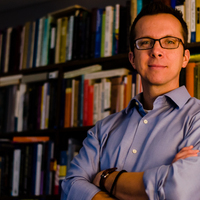
A Gen X Professor Ponders His Retirement
Each morning when I read the news I see in my feed a few items that are plainly targeting me because of how some algo perceives my age and needs. Lots of ads for cleaning gutters (I’m still quite young, thanks, and happy to clean my own gutters). Lots of them based on presumptions about my declining physical fitness (I’d read those if I had time and interest, but I would rather go for a run). And of course ads to sell me things that I really have no need for.
I also see a lot of news stories that try to play into my presumed fears about retirement. “Is $X enough to retire on?” That’s a common theme. And they ask me to compare myself to others in my generation to see how I measure up.
There are times that I am a bit envious of my parents’ generation, since they retired with pensions, and college was something you could pay for with a summer job when they were young.
But I got good scholarships, and managed to pay for grad school by buying and selling homes at what turns out to have been just the right moment. All along, my wife and I have had good fortune, and we have had some support from our family that has made a big difference.
And when it comes to retirement, this is probably how it will be as well. Most folks I know in my generation either have some kind of 401K or other self-directed and self-funded retirement savings. Most of us have a little socked away in there, and most don’t have very much. We’ve contributed to Social Security of course, but most of us have done so with the suspicion that we were mostly doing so to help our elders, and that little would remain for us when it came time to draw out our own share. Oh well.
I’ve spent my whole adult life working for small non-profits. Mostly that has meant church-related non-profits, which means low pay and poor benefits. Despite what you may have heard about rich churches or overpaid university faculty, most of us who work for church-related colleges, especially in the humanities, don’t earn much. That’s not why we do it. Many of us humanities folks have wagered on tenure, hoping that we could remain in the saddle late into our lives, continuing to teach until we were close to the end of our time of drawing breath. Foolish? Probably. But teaching is such a delight, our best classes are like leisure time—until we have to do the grading, of course. And the assessment, and the administrative work, etc. But still.
So while some will measure their readiness for retirement in terms of savings (I do that sometimes), I generally measure my wealth in terms of friendships. My wealth is in the number of people I can call up, invite for a cup of coffee, and they’ll say yes. Recently two friends drove four hours each way to share an evening of food and wine and talking about an ancient book nobody needs to read. What riches! Their company and their insight and the laughter we shared? Golden treasure.
Of course as I read news of universities shutting down, or cutting jobs, or closing departments, I worry a little. I am not rich in that other way, where we count money. But even that is not something that lasts forever, and one never knows what wealth of that kind will remain. For now, I have a home, and books, and a family I love, and a garden that gives me food. I feel pretty rich.