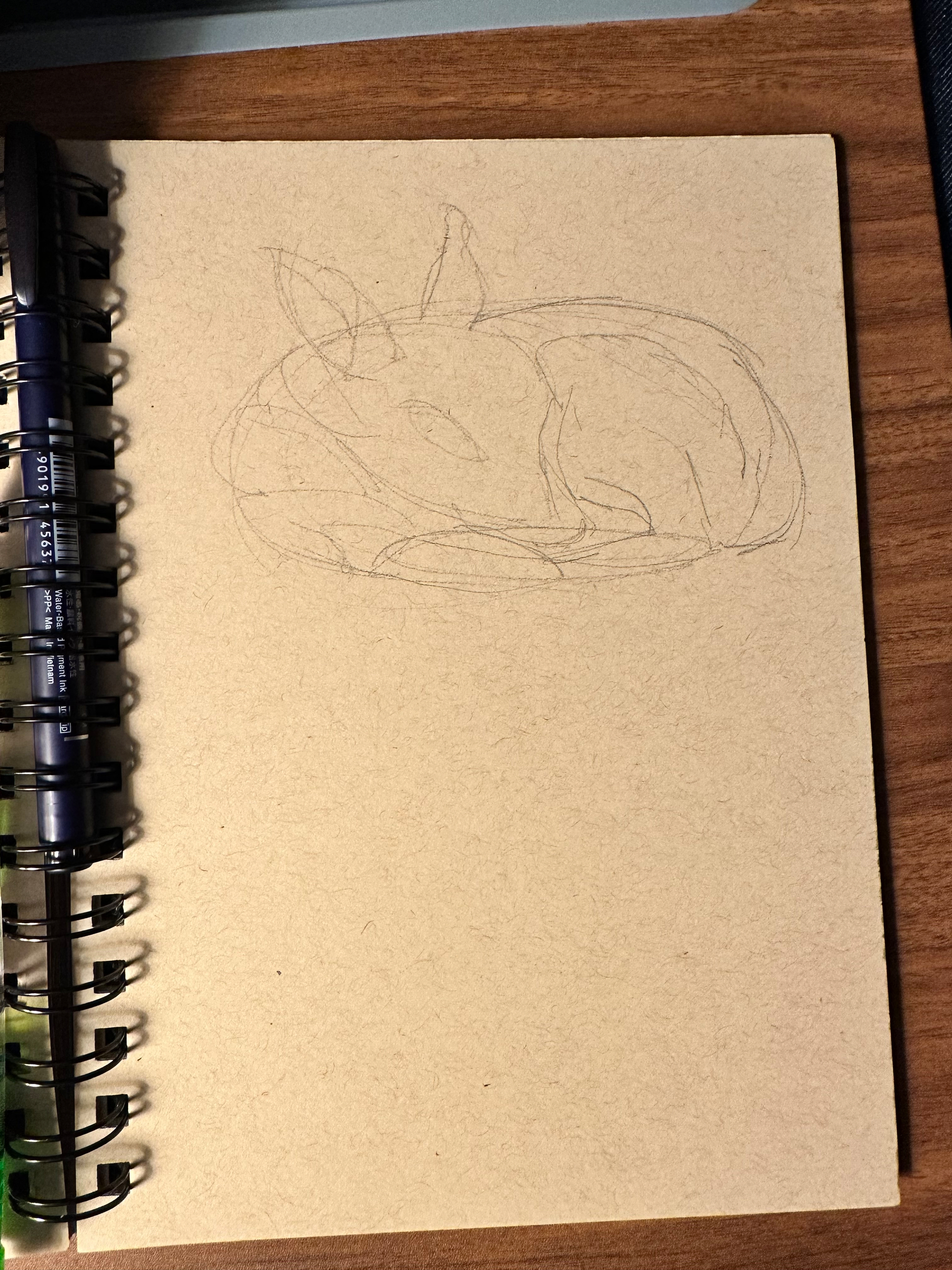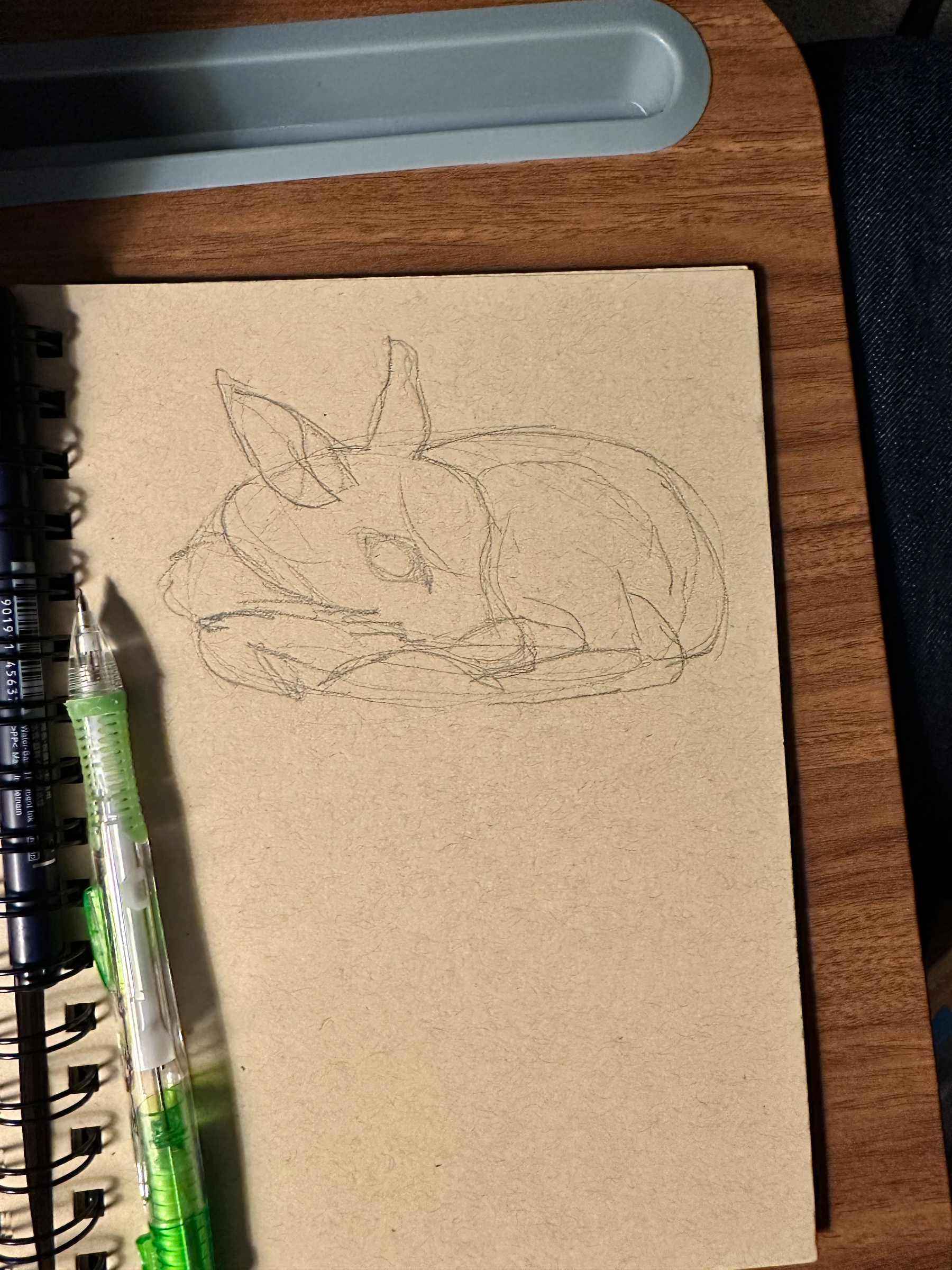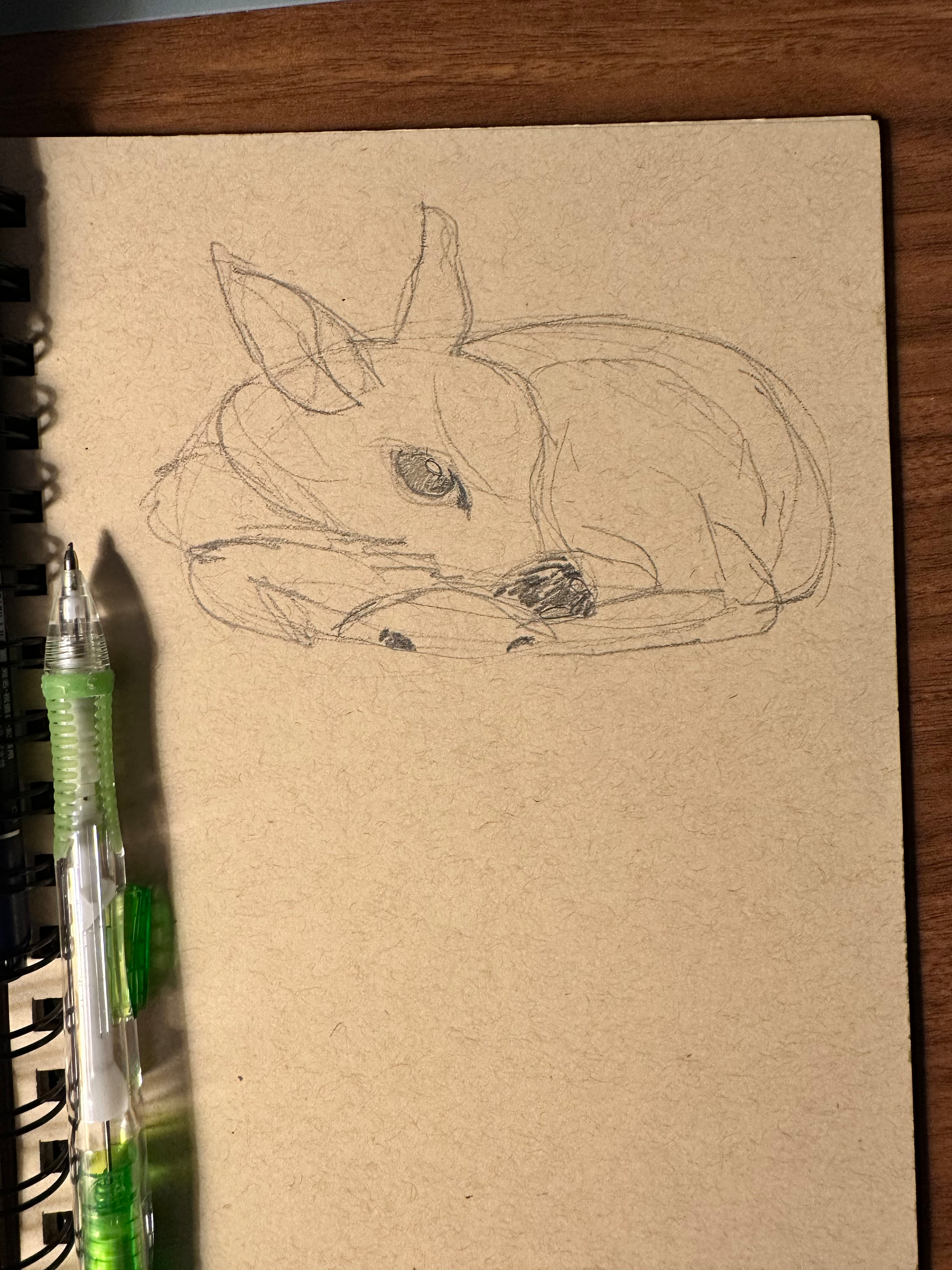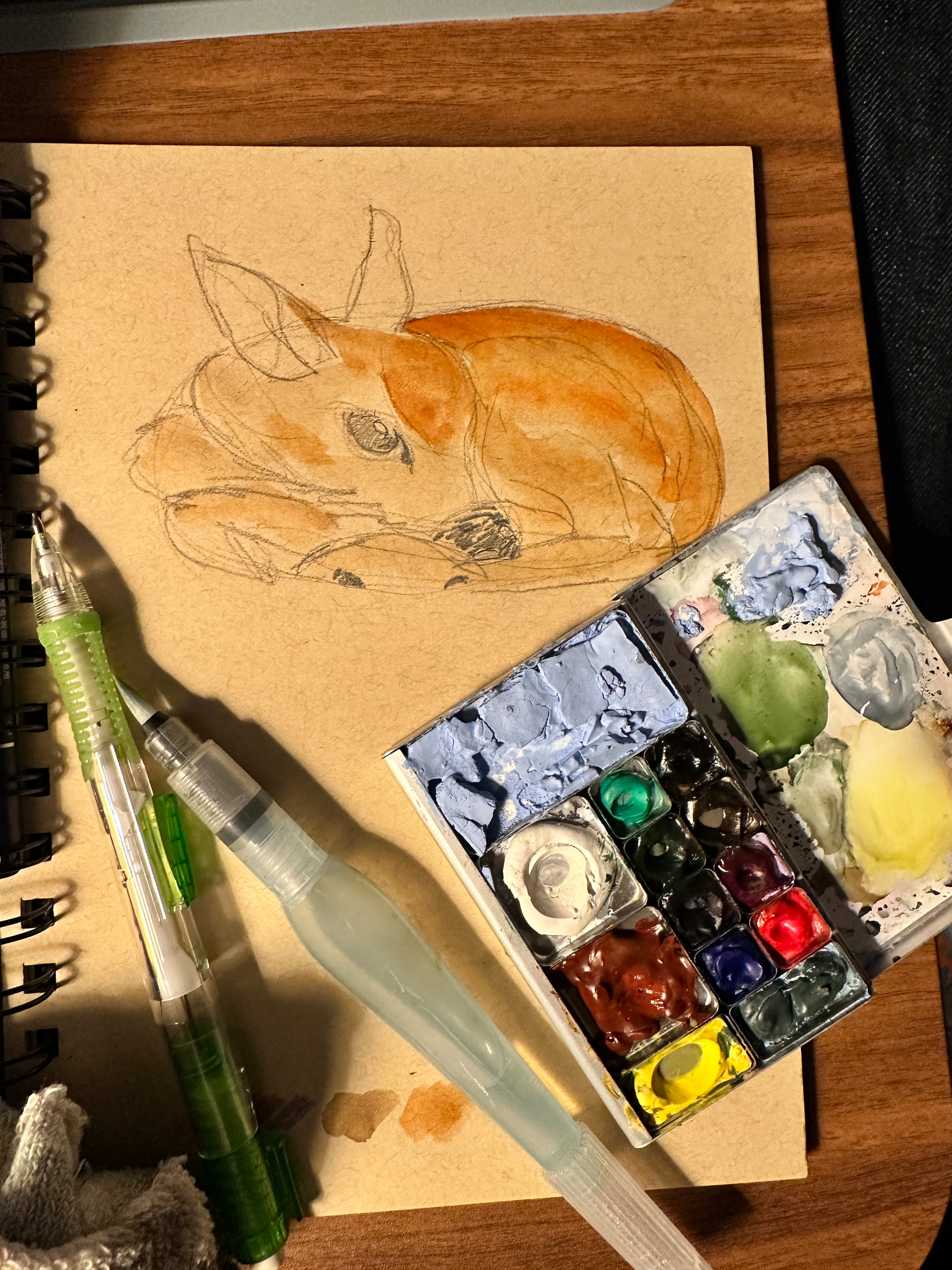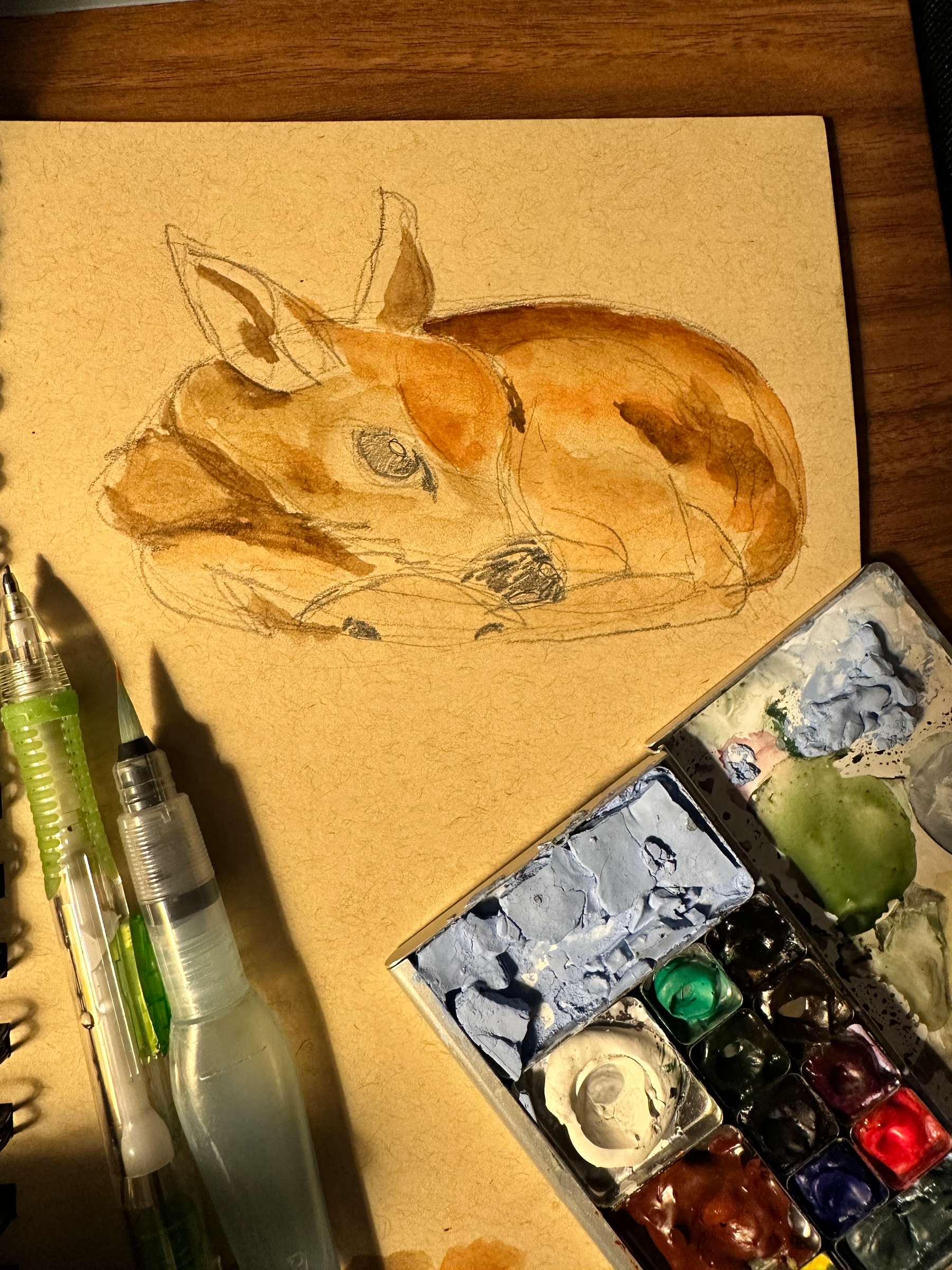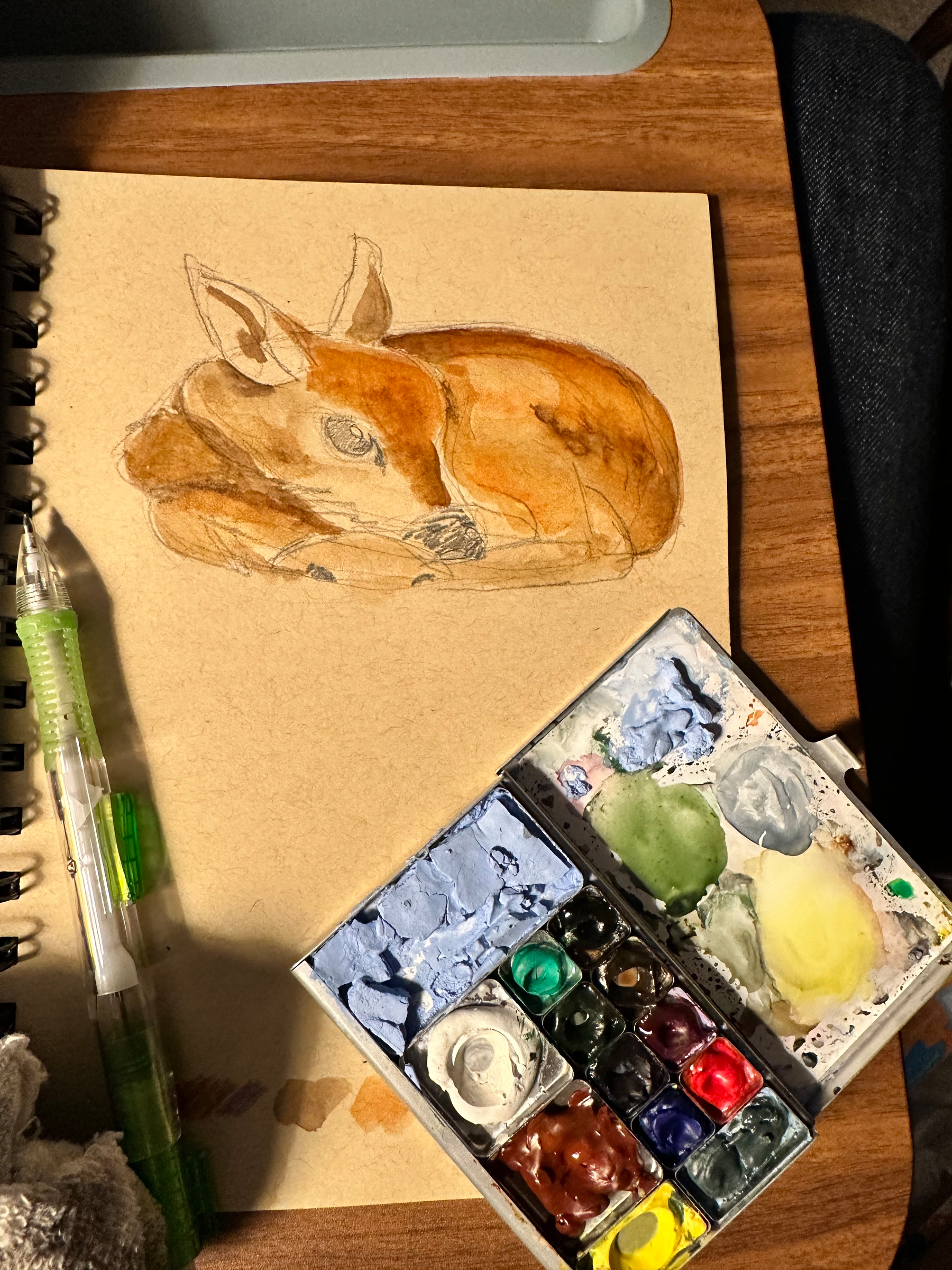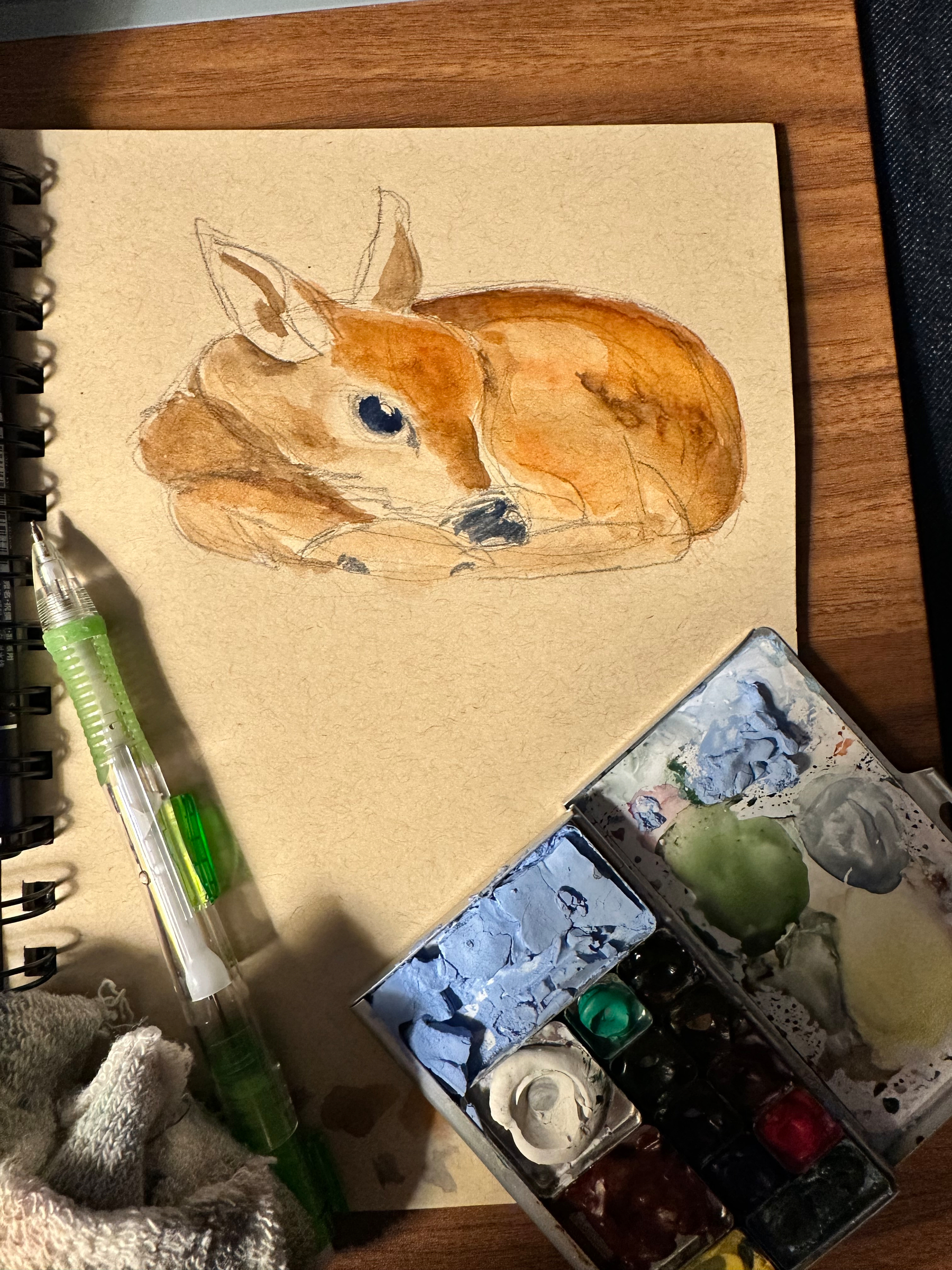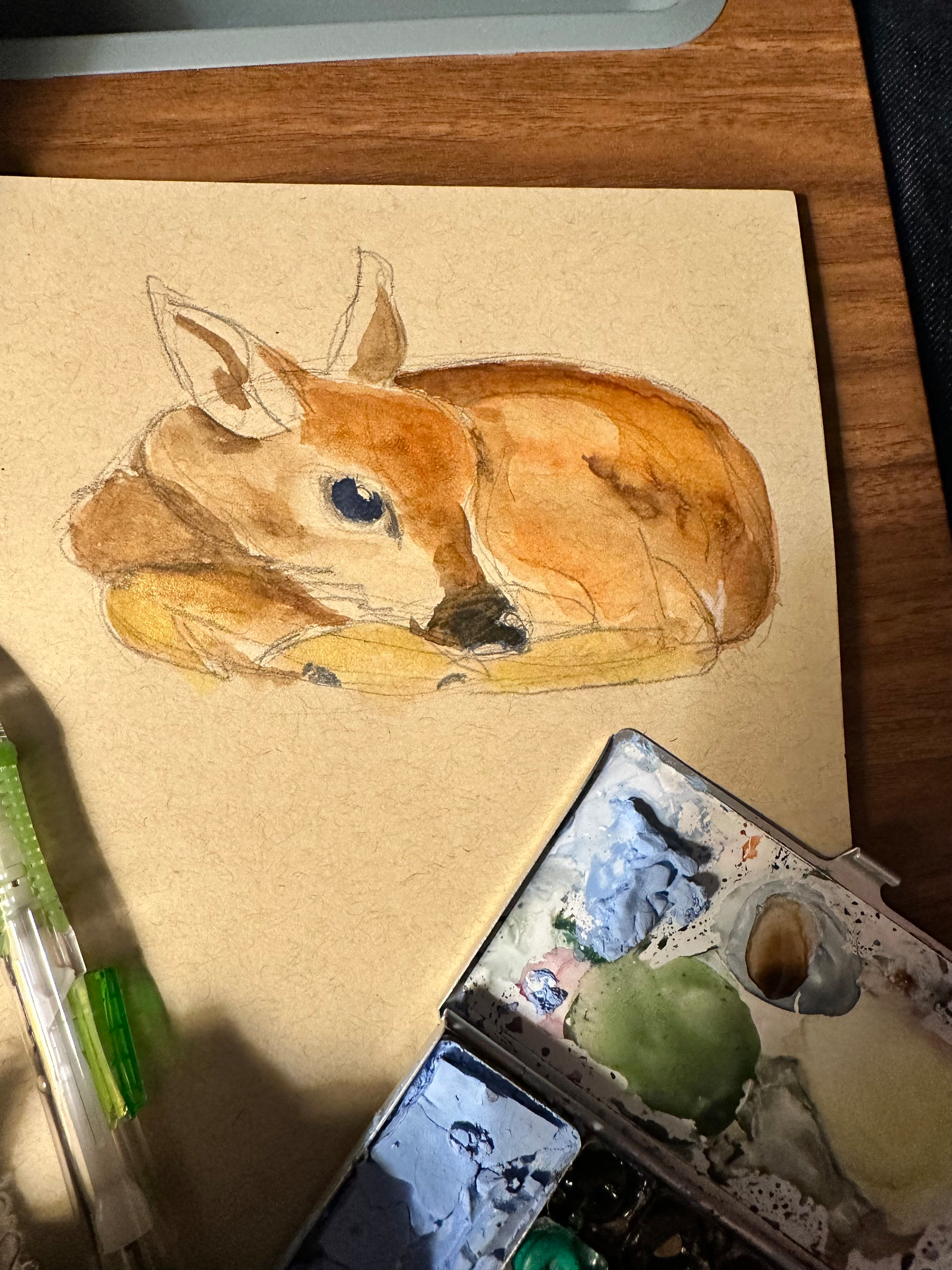
Fawn
Today in my Environmental Philosophy class I asked the students: what would you like to learn to sketch today?
One of them asked to learn to draw a fawn. I thought that was a good idea so I put up an image of a fawn on the screen and asked them: how would you begin?
Another student said: well, based on what youve taught us so far, I’d go for the big shapes first and then I would refine it.
Think you can show us what you mean? I asked.
He jumped up, took the chalk, and started the sketch. First the big shapes and then more details. We talked through the process as he went, but he needed very little help. And as he went, everyone else sketched in their notebooks.
A few minutes later he was done, and his fawn looked wonderful.
Then everyone laid open their sketchbooks and we walked around the classroom looking at what others had done. Every single one had a decently-sketched fawn.
My student had become his classmates’ teacher.
And I walked out of that classroom filled with pride and gladness.
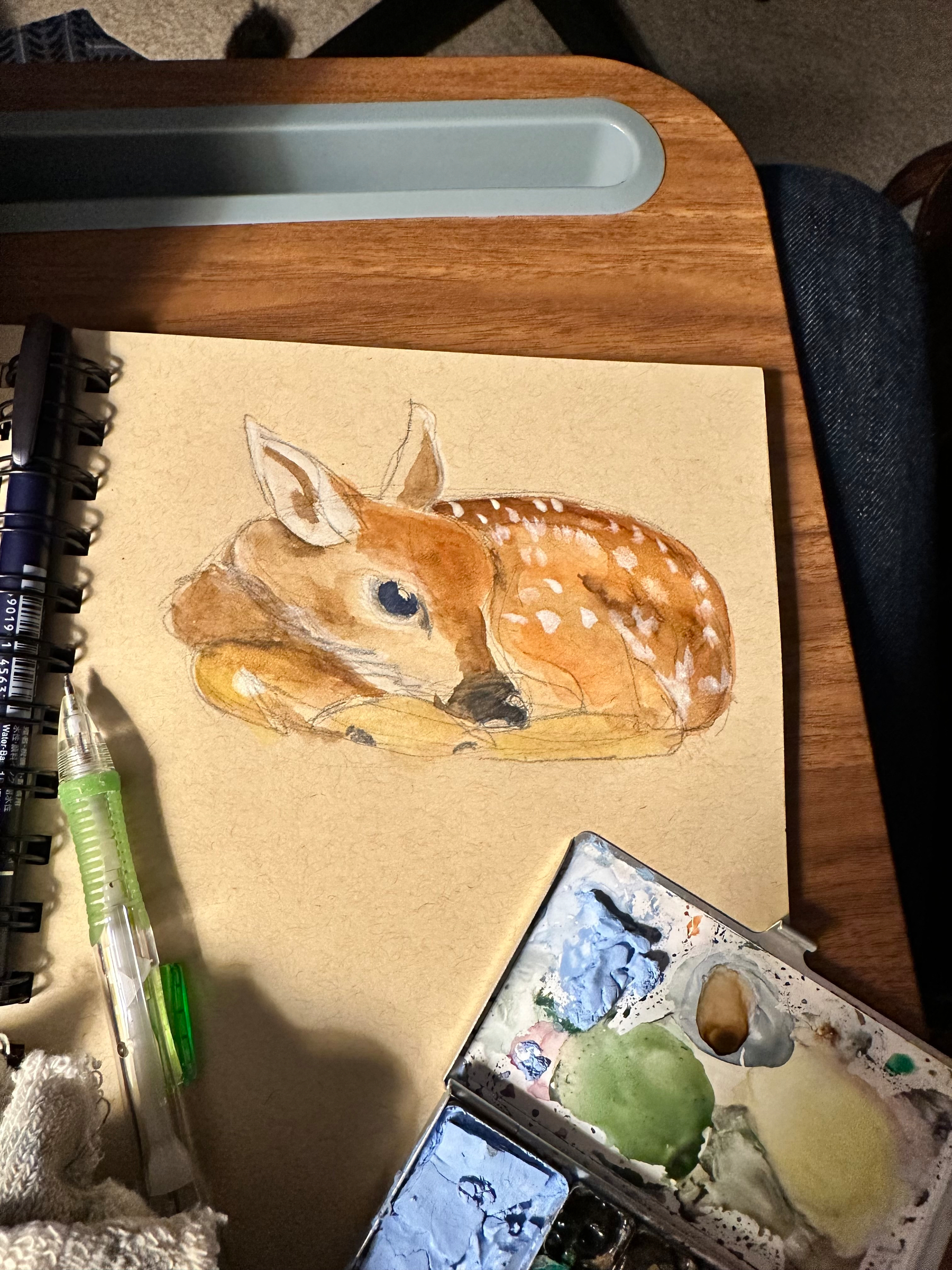
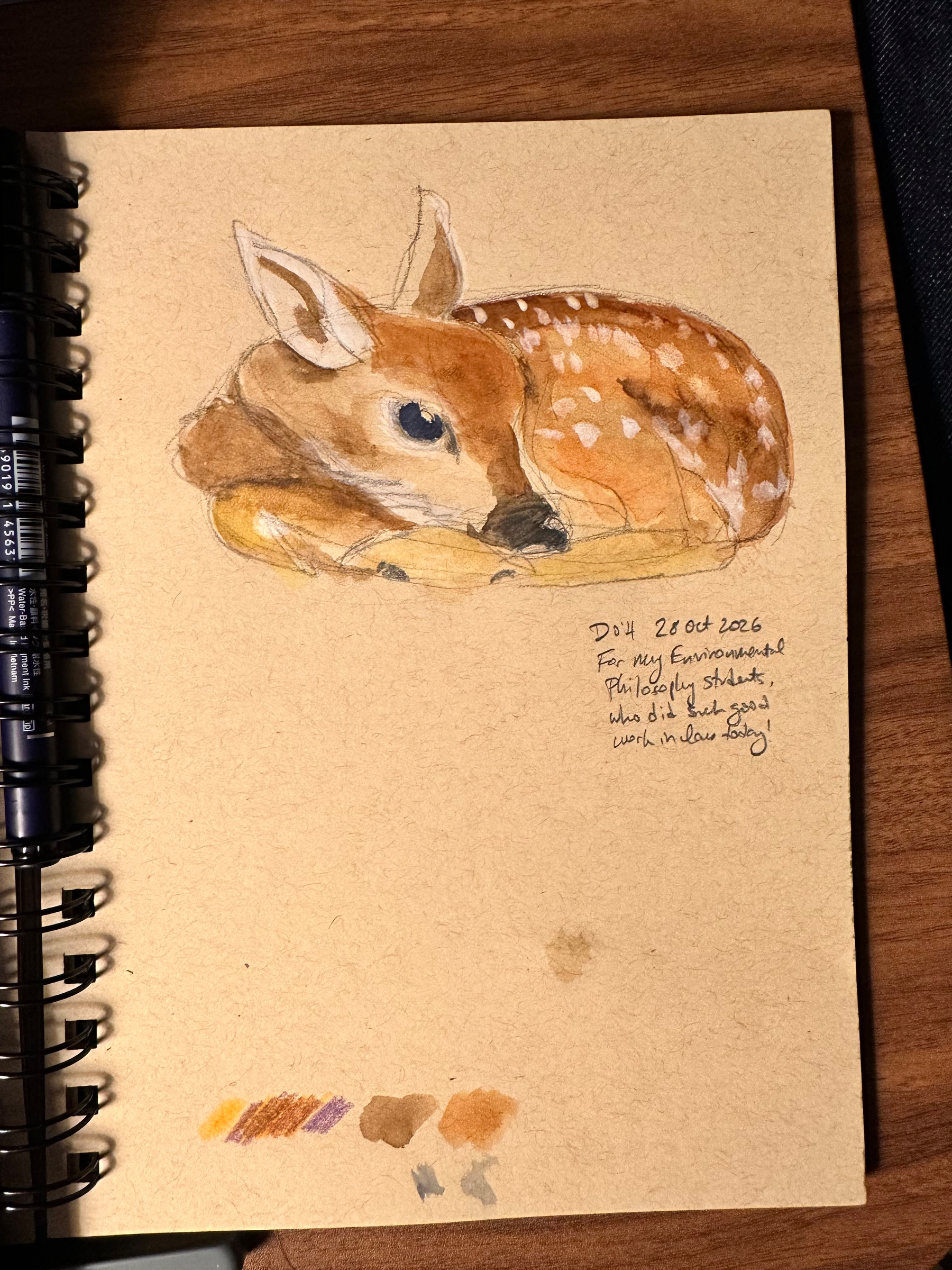
Now here, for my students, I have repeated the process with watercolors, so they can watch me work.
The aim is to observe, to notice, to see. We don‘t need photos; we need to use the eyes we have as well as we can, and to let the world simply be itself before our eyes.
Without first observing, how can we do any philosophy at all? The love of wisdom begins in wonder, says Aristotle.
And wonder begins with noticing, with the small moments that make us say “Aha!” And “Ah!” Or nothing at all, because the world has shown us something that leaves us without words for a little while.
If you look at the automatically generated alt-text for these photos in sequence, you’ll see that the AI goes from thinking it is a rabbit, to a fox or dog, to a deer, to a resting fawn. This makes me glad, too.